Showing posts with label Vampire: the Masquerade. Show all posts

Monday, January 20, 2020

It's like Jazz, isn't it? (an attempt of a post about the different types of DMs out there ...)

Happy New Year, friends and neighbors. I hope you had a good one and wish all readers a great year 2020. I'll keep it casual here on the blog and post every once in a while. For now. However, there's hope that I'll get some more time in the very near future and I also might start tackling new designs this year, as Lost Songs is in the final stages of development and Ø is about to get published soon, so the next fresh thing would be exploring The Grind a bit more (D&D steampunk heists with cards!). So excited to finally tackle that one ... Anyway, let's talk about DM styles.

DMing is like playing an instrument ...

... but with words (you can quote me on that one). All right, that doesn't sound like a big revelation, I guess. However, it's in pushing the concept to see what it means in all its consequences and dimensions where the fun is. I came across this very specific issue a couple of times, although from another perspective: that of a producer of content (as a writer and designer, if you will).

Basically I was getting the impression that reviewers in general try to enforce a standard that doesn't necessarily match (or cover) all the different styles of DM
our little hobby must produce by the sheer endless variations of the basic premise that comes from learning to DM.

Now, I have talked about this from very different perspectives over time. I did that (most of the time) based on my own preferences, of course, for the simple reason that I don't know any better. It's also what has to inform my designs, so what I end up realizing ideally should match what I prefer to run. Turns out, the result is not mainstream.

Bad design choices be like ... [sources]

Which I quite like, to be honest, but I have to defend my design decisions occasionally and it's quite the tricky thing to do, as I'm still exploring my position. Well, I'm not shy in voicing my opinion, but I'm prone to make a strong case even if I have no idea what I'm talking about (result of decades of DMing, I guess).

If I'm lucky, I will argue my way to something conclusive and true over the course of such a discussion. Most of the time I have to sit down afterwards and chew on the problem a bit before I can get anywhere with it (sometimes I get to explore it here on the blog, obviously).

One topic like that was my decision to have some empty rooms in a temple dungeon in that module I wrote. Most reviewers will make a strong case that in a "product" ALL rooms should be described, because why else use a module, for instance, if not to have all the "work" been done for you? I wasn't convincing in defending my position there. Only after I read a post about empty rooms over at Delta's D&D Hotspot and wrote a comment in a Mewe Group about it, I realized not only where I come from, but also got a fair grip (I think) on how that relates to other approaches.

Here's what I wrote:
My take would be that really "empty" rooms are best to give that impression that a ruin or dungeon is mostly abandoned and it helps to emphasize that those small areas where monsters lurk are little islands with reasons to be where they are (the goblins only need 3 room, the giant spiders came through a natural crack to the underdark and set up shop because of traffic and so on). Empty Rooms are also a chance to give players some breathing room or room to maneuver or to set the atmosphere for the surroundings (noise, furniture and stuff like that). In that, empty rooms are necessary parts of the "symphony" that is manifesting when exploring a particular dungeon (or dungeon level). The idea that every room needs to have something is not only very boardgamey, it also seems to be connected to that customer's point of view of "completeness" or the demand thereof, which I believe to be problematic ... DMing is, imo, a creative endeavor and the DM should be able to join the melody with his own (like jazz) instead of just making his attempt on the melody given (I can see value in both approaches, though).
Getting that far into it, I thought it warrants a post, and here we are. But how many types can we get out of this analogy? Let's see.

Type 1: The Jazz DM

[source]
I know I'm not the only one ticking like this. We take inspiration where we can and make them motives for our improvisations. In a sense, those motives can be described as "oracles" (as I talk about here). This style would also heavily lean on sandbox play. DM like this prefer some complexity and depth with the systems they use, but also need a high level of abstraction available (material to riff off of, so to say).

The Jazz DM sees playing the game as a team effort. All contribute to the story (rules, players, setting and DM), everyone brings their own melody, their own ideas and concepts. In that sense, rules could be analogues to instruments, which makes the DM tools the leading instrument, offering specific opportunities for the other instruments to join in. Here's the Wikipedia attempt of a definition for Jazz (as far as it relates to gaming):
A broader definition that encompasses different eras of jazz has been proposed by Travis Jackson: "it is music that includes qualities such as swing, improvising, group interaction, developing an 'individual voice', and being open to different musical possibilities". [source]
I think this illustrates how we are not talking about what music is played, but about the approach to play music.

That said, it can have serious drawbacks. For one, DMs like that will have a hard time (or no interest in) DMing most published modules or adventures since they'll find it too restricting (railroady, even) without any meaningful room for improvisation (even if it's just true for the DM-side of the game*). Another thing is that players need to be up to the task (which means they'd have to bring a somewhat similar mindset). Players that go through the motions and hesitate to add their own melody will end up having less fun.

A third disadvantage I can see would be a lack of dedication for a campaign. Other "instruments" may be too tempting and the urge to experiment can result in a lack of consistency (which I try to compensate by writing and designing stuff ... to mixed success, I might add).

Ideally, a Jazz DM will offer a lively game where like-minded players are able to explore and create over the course of small campaigns.

Type 2: The Conductor DM

For me the next logical comparison. Conductors take great and complex works of art and negotiate them with an ensemble towards a performance. Your typical AD&D DM, I'd say. They orchestrate the perfect manifestation of the "instruments" of their choice and prefer rule systems that offer depth, crunch, teamplay and long campaigns (AD&D/HackMaster, CoC, Pendragon, games like that).

They tend to take themselves out of the game as much as possible. If their style emerges, it is through the conducting of the campaign as the players reach their goals from level to level by playing their characters. They'll be (or aspire to be) very savvy in the rules and trivia of the game and their joy is in seeing it all unfold as proposed by the rules.

I'd say DMs like that are good with pre-defined campaign settings (Greyhawk, Ravenloft, the works ... AD&D again, too), but excel when combining it with some campaign spanning module of sorts (Against the Giants, to give one example ... Call of Cthulhu offers some great campaigns like that as well). They'll come preppared either way. With Conductor DMs  you can play campaigns over decades.

Conductor having a moment ... [source]
The drawback of a DM style like that would be inflexibility in some aspect or another. Depending on the DM this could be rules or canon. They will also have very concrete ideas how the game is played, which means that it'll need players that are able to play along with that. 

Ideally, Conductor DMs orchestrate epic campaign arcs for players to experience and be a part of over long times.

Type 3: The Band Leader DM

This DM is less about the rules as he is about "personality". It's your typical storyteller DM, if you will (World of Darkness is the base line here, but there sure are more games like that ... 7th Sea, maybe, or Over the Edge and Prince Valiant).

The group dynamic is more towards an assortment of band members that might even have different agendas. Teamplay isn't a necessity as it is more about exploring a selection of themes and concepts. The Band Leader DM offers the stage for the other members to express themselves and shine.

Something like this? [source]
DMs like that will tend more towards improvisational theater than indirect narration or even meta play. Plots will be more dramatic and emotional than, say, epic. However, just as meticulously prepared, with the focus more on story, history, background and personal impact.

As far as drawbacks go, I'd say Band Leader DMs can run the risk of having short-lived campaigns (usually purpose build, as in, exploring some theme or another). Another drawback can be the emotional toll of playing that way and conflicts that can result out of it, depending on how mature the member of a group are.

Ideally, Band Leader DMs offer an emotional experience for players that like to express themselves in a more direct, or say, theatrical way. Everyone gets a chance to be part of a big performance.

Type 4: The DJ DM

This might be the GUMSHOE DMs. And maybe most of the indie games in general? Definitely Dungeon World and consorts. And the whole Light rules Movement, I think. It is not as much about offering to reconstruct an experience as it is about imitating one. It follows the idea that you don't play to have a step by step recreation of whatever characters are capable of but instead an abstraction of that to a degree that the process can be evoked instead of produced.

It's a difficult distinction, but nonetheless one worth having. Hear me out here. I've been thinking about this for a while now, because people tend to ignore the difference to, say, all the other games: it's the analogue of dancing to music instead of making music (which is why the DM is a DJ here, duh).

It's games where the player gets the clue and gets to shine while exposing the murder instead of grinding the evidence and hoping for some lucky rolls. It's the games where you don't have to make a calculated risk in a fight to kill the monster, but instead fight to celebrate the action happening. It's about dancing to celebrate the tune the DJ DM is throwing. You know what I mean?

Utz utz utz ... [source]
 The drawbacks I see in DMing games like this is in the limitations it forces on narratives. You don't play to get there, you play to talk about it, if that makes any sense. It's imitation, so, there'll be no depths to most games, because they quote instead of experiencing ...

Anyway. Ideally, a DJ DM will offer a Best Of players will air guitar to for a couple of evenings. And you can have that like having a night in the club every other weekend. There's nothing wrong with that (but it is a difference).

Type 5: The Composer DM

This is the DM as author. I'm not sure this is a real category or a cautionary tale, but lets go through the motions here. This is the DM that wants to tell a story and goes through the motions of engineering it. Some say, it's the guy that should rather write a book ... However. Role playing games are a new medium and who's to say that an approach like this is wrong? If we can have interactive movies, we sure as hell can have auteur-driven campaigns.

So here's my thinking: a DM like that would be driven to tell a grand story and the players are merely audience. It'd need players going along, but those players exist, I'm sure of it. This isn't even about quality, I'd say, as long as the illusion of quality is agreed upon, everyone is having a good game (I'm thinking about a vibe like Gentlemen Broncos for some reason ...).

What I'm saying is: it can work. DMs like that are about controll and will most likely claim authorship of the rules as well (playing something obscure, if not entirely DIY). However, players into emerging themselves into that private canon, will most likely reap the benefits of indulging the Composer DM.

Make it artsy, baby ... [source]
Well, the drawbacks are obvious, I think. If the composer isn't any good, players will ride that wave of hope to be close to an undiscovered genius until they crash on some neurotic cliff incident of sorts. You'll have DM player characters and calls towards the narrative anmd all those bad habits.

Ideally, the Composer DM will do a great job to please an audience that accepts that the DM is in controll. I believe it's rare, but if you can make it work, it might actually be exceptional.

Can be, but needn't be ...

Well, that's 5 styles right there. I'd go as far as saying, it covers a lot and that the analogy goes a long way. Is it definite? No, it's most likely that people will read it and find themselves a bit here and there. It's a spectrum, maybe. Is it complete? I couldn't say. Maybe not? I sure as hell have gone as far as I dare to push it. But I could very well have missed something crucial (you tell me).

That said, I see myself in most of the above to one degree or another. I think I'm the Jazz DM right now, but I would love to be the Conductor (for some proper AD&D/HackMaster campaign, man), I've tried and failed to be the DJ (but will take that approach for some limited D&D one-shot convention gig), I was the Band Leader for a while (oWoD, for real) and the Composer .. well, who doesn't like groupies :)

Another possibly interesting take-away would be that the standards we are mainly talking about right now don't pander to all the possible styles to DM a game. They mainly pander to two (I'd say). Just food for thought.

So where do you guys see yourselves? Anything I missed? Any more benefits or drawbacks to the styles I describe (I'm somewhat biased, for sure).

What's your style?! Huh! [source]
* Uuuh ... now there's a topic I haven't seen anyone talk about: railroading gamemasters. My immediate take would be that it can be just as bad (for the same reasons) as railroading players (wrote a defense about railroading once that'd apply here too, if you are interested). I'd also say it happens far more often than player railroads ...

Thursday, January 12, 2017

Revisiting a Classic 2 - Vampire: The Masquerade (First German Edition, 1993)

Vampire: tM has been HUGE in the 90s and when the German translation of it hit the shelves (the second English had been the first German ...), I was no different than many, many others. We played it for a while and then stopped. Now, 20 years later, I take another look at those books to find out ... well, to find out what I'll find out. Spoiler: it's more different than we played it back then and way more "old school" than most of the old school today. This is Part 2.

New to this series? Here's Part 1!

Second things second ...

Did Vampire fail as a game because it succeeded as a business model? Is this even the proper line of inquiry? I don't know. What I know is that I lost interest in the White Wolf splat book orgy way before I lost interest in the game. I mean, it had been kind of insane, right? V:tM 2e (English version) saw 57 publications between 1992 and 1998. And that's just classic Vampire! There'd been several other lines, Werwolf: The Apocalypse being the strongest among them (I think).

Then they revised it in '98, published and re-published it all until they actually discontinued the whole thing in 2004 ... to start the franchise completely anew the same year and revive the "classic World of Darkness" (cWoD, not oWoD as I wrote in Part 1) again in 2011. Sheesh, that's a lot of canon. No 2 (c)WoD group ended up with the same game, for one reason or another.

Add discrepancies between the different rule sets and the lack of compatibility that came with it and you have a beautiful mix for all kinds of edition wars, splat book wars, variant wars ... So boring. You invest hundreds and thousands of credits into a game, just to start from the beginning every 6-something years, you make it your own every time and then you fight for it because you want to be more right about your decisions than others. Sounds very much like the D&D publication history, right? Still don't see the appeal.

Once a year in Leipzig ... the WGT! [source]
Anyway, the World of Darkness was a phenomenon and made lots of people earn a decent buck. So many, in fact, that the game is still running strong today. At least where I live (Leipzig, home of the famous WGT - Wave Gotik Treffen) and on several strong communities all over the internet. Add PoD for almost the whole product catalog and high availability (most local game stores will have some of it or can order more quite fast, amazon has a decent selection, lots of cheap used books and so on ...).

Well, they couldn't have known in the beginning. The 2nd English edition was published just one year after the first edition and the German translations had been even more behind, which left the game quite, let's say, innocent and untouched from all the bloat that was about to follow. Back then we didn't draw as much inspiration from the World of Darkness as we'd get from movies like Interview with a Vampire and The Lost Boys or comics like Preacher ...

Actually, I think it's safe to say that they hit a nerve with their game. Urban Fantasy was already in the gaming subconscious in the 90s and is still running strong today. White Wolf managed, if nothing else, to constantly add to that some way or another. They still do. As a matter of fact, I just saw a huge part of the SyFy series The Magicians and it's a picture book Mage: The Ascension campaign (without being associated with WoD).

That's why it worked for me back then and still kind of does today. But back to the book ...

BOOK 1 - The Riddle

Chapter 1: Introduction

The introduction chapter is remarkable for a couple of reasons. Of course you get the basic "what is role playing"-part and there are some words on the position of the storyteller and the players. All of it is written as if the reader is completely new to the hobby, building references to the nature of the game and about telling stories in general through common denominators like playing cops and robbers or board games. That's one way to do it and, as such, completely unremarkable.

Where it gets interesting is as soon as they finished talking about characters and describe what a "Brut" is (English equivalent seems to be the "coterie" or pack the characters form). It actually becomes part of the "hierarchy" implicit in the games structure that is: storyteller - players - characters - group.

That is something you see rarely (and I think something White Wolf than dismissed at least for the revision) and I think it's a good thing. Role playing is not only a bout playing a character, it's about playing a character that needs to function in a group. It's the first time they make that point in the book and pretty early established, at that. We will encounter this again later.

Another great piece from the book
by Tim Bradstreet [source] 
Another thing the introduction does, is explaining some core terminology of the game. Interestingly enough, this is solely focused on becoming a Vampire and what that means, which then, in conjunction with a few sentences about the winning or losing in Vampire, ends the whole affair with the spirit of the game: what's it like to be a Vampire.

I think this is nicely done, leading the reader from having no idea to knowing the gist of it without already overloading it with choices or details. The only thing I felt a bit out of place here were the parts about Vampire LARP, but I guess it's fair to mention it here, as it gets a little bit more detail later in the book.

Prepared like that, we can dive into the World of Darkness as a setting in the next chapter ...

Chapter 2: Scenery

The World of Darkness is a Gothik Punk setting and we get to read about that, true to the introduction, through the eyes of a Vampire. This is the first impression we get. A transition from our world to that much darker and scarier counterpart of that world, where Vampires actually exist. Streets full of blood, corrupt politics, decline of western culture, overpopulation, all that experienced in an endless night and trapped in the cities because creatures more dangerous than vampires wait outside the city limits. Horrors facing horrors.

It's a nice blend, ending with the idea that Vampires try to keep as much humanity as possible to keep sane in a cruel world, before we dive into the World of Darkness proper and learn about the social hierarchy of the Vampire society. This is still keeping on the surface, but we get an idea how old Vampires could really be, like biblical old. And it introduces the concept of a "prince", something almost every city will have in one form or another.

That's what Gothik Punk is nowadays: a fashion statement ... ah, well,
can't make that shit up [source]
Again, I admire the structure here. After introducing a couple of new terms, we go back to Vampire politics and intrigue, which then leads to the necessity of rules for a Vampire society and introduces the Traditions, the rules enforced on most Vampires and what happens to those who break them. A good example how a setting informs a style of play, hierarchy and plot before the rules.

Next we learn about different Vampire sects, Camarilla, Sabbat, Inconnu and all those different political groups and their ideas. This slowly gets more and more detailed, going slowly from the outside to the core, conveying general knowledge to allow a reader seeing how it all connects.

The next part is, consequently, about the different clans and their origins. A nice twist here that this introduction really is about the origins of the clans instead being about what you could be playing. So the learn here that the Brujah had actually been guardians of knowledge before they fell from grace and ended up in the desolate state they are when we enter the game.

The way this is set up, a reader will have to wonder what of it is true and what kind of scheme is behind all of it. Why are the Brujah held in this state of desolation? Is it all a big scam from one of the old ones? Part of the Djihad? I found it very inspiring. You get just enough pieces of the whole to wonder what it all might mean. That's good writing.

This is a meaty chapter and before it really goes into detail about the generations and origins of Vampires, we also get to read about lesser clans and other oppositions, like werewolves and witch hunters. It all sums up to a quite delicious Urban Fantasy mix and it makes quite clear that the Vampire characters players will get to play are monsters, for sure, but very low in the food chain.

The end of this chapter is a lexicon not of game terms but of slang terms, used by Vampires and divided between general terms, old terms and slang. I love that. The idea is that you can get a sense of a Vampire age by the language he uses, which is solid advice to begin with, but getting that close a look into the culture at this point is just gold. I really enjoyed reading this although it's basically a list of entries with short explanations.

Chapter 3: Storytelling

Notice the pattern here? After getting a head full of ideas and concepts, the next thing you'll read (when reading it in order) will be about how to make a story for the game out of it. Still no rules, just a world, a couple of ideas and some basic structure to get them told. That's what I'm talking about. The book is taking the reader/storyteller by the hand, teaching basic knowledge about the craft before anything else and it's about telling good stories.

Role playing games being a medium with it's own set of peculiarities (compared to books or movies or what have you), this whole chapter is a lot about the dynamics between storyteller, players and the rules and the things you have to consider when telling a story in a role playing environment. It's all solid advice.

Actually, I had been a bit afraid encountering the tendency I've seen in other storyteller games, where the story always trumps the rules (which always means that storytellers should ignore die results that harm the story, like a character dying, for instance). But no, they actually say that you have to find your own way handling it, but ignoring bad die results because they might hurt the story, will hurt the game instead in the long run. So what a good storyteller does, is finding a way to make the result work despite the bad consequences.

This doesn't mean the rules have to be obeyed by the letter, but the storyteller will always have the last word (which is good), he just should consider the implications if he openly ignores the rules to change some outcome (which is true).

This chapter also talks about different player motivations to participate in a role playing game, about storytelling techniques, in general and advanced, gets a bit more specific about LARPing Vampire and how important props and the right surroundings are for the game's atmosphere (never play during daylight hours, use lots of candles ...) and has a nice list of do's and don't's.

At the end we get an excerpt from the Book of Nod about the biblical origin of the Vampires in the cWoD.

And that's the first three chapters (or 75 pages) of the book. I'll say it again, this is good writing and a great introduction. It leaves the mind spinning with possibilities and ideas while establishing all the pieces necessary for the game. At this point someone aiming to be the storyteller of a Vampire campaign, might already have a general concept or idea what he'd or she'd like to do and how. I think that's impressive.
The kind of story* I had in mind in the 90s ... [source]
It really shines with it's general advice. I mentioned at the beginning of Part 1 that this game really informed how I DMed all my later games and this is why. You don't get that by reading the Rules Cyclopedia and I don't know about any game before Vampire that explained role playing the way Vampire did (if you know one, please share in the comments!). If you read a bit on my blog, you'll know it all had a lasting impression on me.

Part 3 will be about BOOK 2 -The Becoming

After reading about a quarter of the book, we finally get a glimpse of the rules. Just the basics, really. And then we get to make characters and plan proper campaigns in the cWoD. All this will be discussed in Part 3, of course. In the near future (I might mix it up a little and write about something else in the meantime ... let's see how people take it).

I have to say, I enjoy good old Vampire a great deal more than I should. Already have an idea for a campaign, too. Well, maybe I'll make a final post with a campaign hook and all the ideas I have collected so far. We'll see.

When writing this and doing the research, I found out that they changed a lot with the revision of the rules in '98 and I started to wonder at what point people entered the game and which editions they read or what their impressions had been. Is there a huge difference to what I described here? I'd be happy to hear some thoughts on that, if someone is willing to share!


* I mean the Preacher comic, of course, which I was a huge fan of back then. A Vampire, a preacher and an assassin go into a bar ... never gets old. Was the source for some great stories, too. I just got to re-read it and I have to say, it's still fun (just not very pc ...). Btw, ignore the tv show. It has nothing to do with the comic. Nothing.

Thursday, January 5, 2017

Revisiting a Classic 1 - Vampire: The Masquerade (First German Edition, 1993)

Vampire: tM was one of those formative DMing experiences for me, something that would define my campaigns for years to come and it's up there with my all-time favorites, the D&D Rules Cyclopedia, HackMaster 4e and Cyberpunk 2020. Now, 20 years later, I want to find out how much of it still holds and what changed. It's been one off those things I wanted to do for a long time now and I gotta say, different (old?) eyes see different things.

First things first:

An unconditional recommendation! [source]
I never was part of the huge V:tM-hype of the 90s. I was lucky enough to get the books early (I think around 1995) and the whole goth-thing wasn't much of a thing then. It left me to form my own idea what the Vampire Universe looked like. It had been decidedly less Anne Rice, black lace and mascara and way more Punk with a good dose of Rammstein, Industrial, Stephen King and lots of German after-war decay. I also took a good deal of inspiration from the dirty 90s aesthetic of b-movie horror films like The Prophecy* and anime movies like Ninja Scroll (if that makes any sense). And we had the Weltschmerz going, but, you know, puberty and shit, so no surprises there.

Good times. But it was different enough to make me avoid the whole Vampire fanboy crowd at conventions and what not. We played a bit, I collected a good bit more of it (Dark Ages, Werwolf Wild West, Hunters, lots of Exalted ...) and at some point (D&D 3e is to blame for that, too ...) we just stopped playing in the old World of Darkness (oWoD) and moved on.

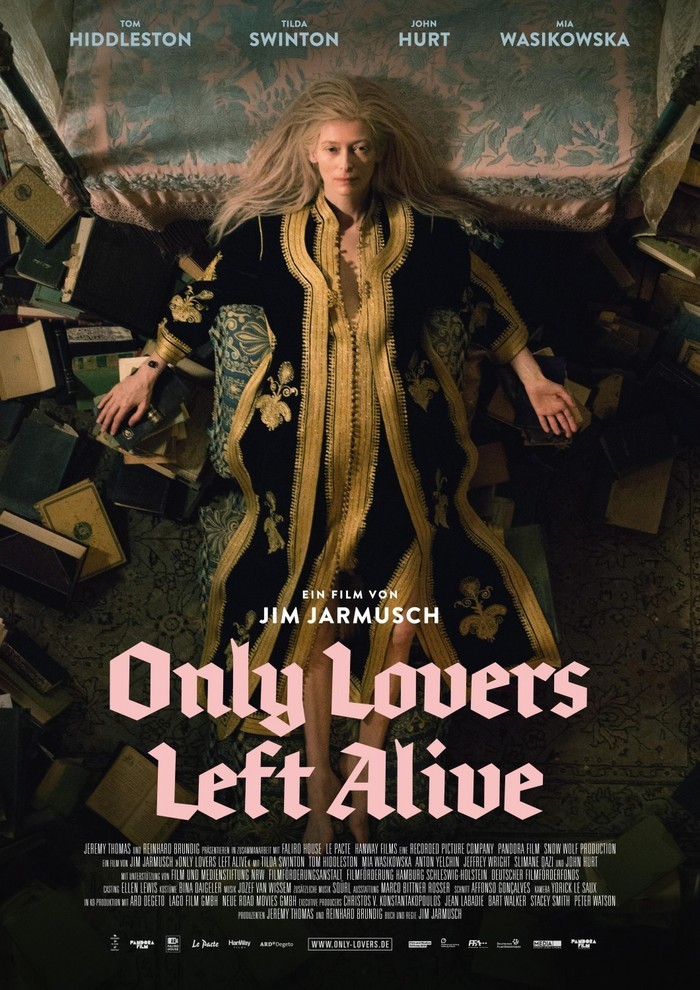
What we played back then was a mix of Urban Fantasy I still enjoy and revisit regularly, in gaming and in other media. If I were to name four sources that would inspire me today to DM a bit oWoD, it'd be ASP (lyrical goth-industrial?), Only Lovers Left Alive (Jim Jarmusch's latest and, imo, one of his best), What we do in the Shadows (great Vampire-Mockumentary!) and Leipzig (more punk, old buildings and decay than in the west, odd and very inspiring).

Anyway, let's get to the book proper.

Cover ...
Präludium: The Damned

It's the part I skip normally and I'm not sure I actually ever read the prose introducing readers to the mood the game is supposed to generate. Or at least, every time I start reading something like that, I end up skipping pages because it bores (or annoys!) the hell out of me. Most game designers aren't authors. And why should they? Well, I read it this time and ...

... it was okay? It starts with telling us that the Vampire is nothing more but an old symbol, a mirror of ourselves. Okay, fitting enough. Then we got a page with some nice artwork (see next picture below) and another page with a letter in a very bad cursive typeset. It starts the personal description of the World of Darkness as seen from an old Vampire with the initials V. T., from the next page on in a decent font from then on.

As I said before, I never gave it the time of the day. Reading it 20 years later, I see nuances I didn't see before (I was pretty ignorant and opinionated back then, being 17 and all that ...). I appreciate now what they did there. We have an unreliable narrator, going through all the aspects in the game from a, well, storyteller perspective. The text is sprinkled with little idioms in Latin, French, Spanish and English, given the impression that it's written by an educated person from the 19th century.

Great artwork!
It's heavy on the information about the world, which is good, and the reader doesn't get a lot of information about the writer other than how old he is in the context of the game world. You might think it's a Vampire from an Anne Rice novel. I thought exactly that. It's only in the end that we get a few subtle hints who is writing and you actually only get it if you know your Vampires, as it goes never beyond using initials: the writer has to be Vlad Tepes, Dracula himself. Nice touch there.

Book 1: The Riddle

This one starts with another prose text, this time about someone becoming a Vampire. Again, nothing special and a bit over the top for my tastes.

Book 1 comprises the first 3 chapters of V:tM and focuses on what a role playing game is, how the oWoD is structured  and what a GM (narrator) does. No hard rules until chapter 4. I think that's a good concept. Assuming that a reader most of the time will be a (potential) narrator and not a player, it's good to get into the philosophy behind the game, the game terms and the position of the narrator in establishing the campaign, before talking about the game mechanics or character creation and player stuff.

I'll keep the details for another post and leave it at that for now (read on with Part 2). I like this old book. It's well done and not at all overwhelming. Well written, too. And I can already say that it's going to get better than that. The mind-set behind the whole rules is, if I may say so, very much what we regard as "old school" nowadays and lots of advice I found so far here by rereading this, is advice you will encounter in one form or another all over the rpg blog-o-verse cyclically and on a regular basis.

More when I get there. One last thing. I mostly write about D&D, DIY and the OSR, so I guess most readers come from those corners. So I'd be interested what experiences you guys had with Vampire and what your impressions are. Feel free to comment, I'd be happy to hear about it.

You know what I mean ... [source]

* Got to see that one again ... It has Christopher Walken as an Archangel, so there's that. But Viggo Mortensen as the devil!? Young me wouldn't know ...