Showing posts with label Player Skill. Show all posts

Monday, January 8, 2024

Addendum on Balance: Players Maketh Balance (or do they?)

Alright now, I said a lot about what I believe balance to be and how it is all connected in Part 1, and yet I did not convince my good friend Eric that m argument is sound. Sort of. We talked about it afterwards a bit and it baffled the both of us that we could not agree, since we both (seem to) have almost the same idea of what makes a good game. We've tried, we had the same fun. How come we did not see this one the same. I think I found an answer to that, although that might just be another can of worms to open. Lets take a look.

You want to catch up? Read Part 1 here and follow the bread crumbs.


Something about balance ... [source]
A flawed understanding?

What "balance" is should be the easiest thing to answer. And yet, especially in gaming, there are very different takes on it. But if you take a closer look at the topic, you'll find that while all are talking balance, they seem to do so from very different points of view.

I know for a fact that a GM will have a different understanding of what "balance" means for him than a game designer will have, with a player being the third element in a game that might also have yet another take on it. What I think I managed to establish was that at least those playing a game should be on the same page in that regard, but gaming culture is not so open in its terminology that you could find a difference, never mind an agreement (if it doesn't happen accidentally).

The irony is I thought I had understood one of the basic aspects about the whole affair, and yet, it did not even translate to someone like-minded. How can we have so different understandings of balance that we cannot even talk about it? Anyway, we kept talking and it went back and forth a while. Then it hit me: what we are talking are two different understandings of balance, all right. Mine was that a game needs to be balanced to work properly, Eric's was that he did not like it when the game was balanced towards the players, giving them an even challenge every time.

I do not like that either. We still disagreed, since he assumed that me talking balanced design meant that part was included ... or even the sole purpose of balanced design.

Really not. Not in my opinion. But how to explain that? What is the fucking difference between a balanced game and a game skewed towards the players? It hit me then that the balance Eric criticized (rightfully so) was a flawed yet popular understanding of "balance". Basically the idea that we need to play our games in tourist mode.

Let me explain that.

Morrowind versus Oblivion

This is what it comes down to: my understanding of what "balance" means in a game is best explained with what Elder Scrolls III: Morrowind does. The sandbox is balanced and filled with encounters that range all across the spectrum, from very easy to very hard. Quests are mixed in, traveling is an adventure (but there are shortcuts). As a player you have to find a way to make that balance work in your favor.

The balance players in Morrowind are striving for is the one they can force on the game.

If you are clever and crafty you can create all kinds of shortcuts and tricks to beat tougher challenges then your level would suggest. I once robbed a powerful elemental blind just by being sneaky and patient. Took a couple of reloads, but I looted that mine he had protected somewhat fierce, gaining material I shouldn't have access to at that point. Ha! It was the kind of fun I'm looking for in a game. Still do.

Best CRPG. Ever. [source]
You'd die more often, especially when encountering something tough you haven't seen before. But that was all part of the fun, all part of the learning process needed to beat the game. All part of the challenge.

Elder Scrolls IV: Oblivion, on the other hand, came out a couple of years later and is also regarded a classic of the genre. Supposed to be great combat, even better storytelling, huge sandbox. And yet, I never touched that game, because the first thing that went public about it was that encounters scale towards the player, like, all the time.

That seemed wrong to me.

Because it doesn't matter what you do or where you go, everything that opposes you will be your level. Even the end boss, for that matter! If you puny level one character knows where to go and where to find a sword on the way there, he can go right up to the big end boss and beat up his level one ass ... But you could also play hours and hours of the game, fights being even as they are while you are getting more and more powerful. Better equipment, better weapons and spells. The dressing changes, but you are going through the motions.

No surprises, no real challenges, just be what you can be on a level, and beat what is opposing you. For at least roughly 30 hours if you do it to have it all touched, but for as much as 184 hours (or so the internet says).

Either way, seems to me like a HUGE waste of time.


Oblivion: a waste of time? [source]
It is something I see in computer games more and more often nowadays, the time you can waste in those games just to grind levels, or even to go from a to b and harvest and loot all the way through ... you could spend hours driving through Vice City in GTA V, no problem. The game would even throw you a bone every now and then to show that you are "progressing" somehow.

Blech.

Anyway, there you have it:

The skewed understanding of balance is to make the players part of that balance instead of challenging them to find and make that balance themselves.

This is neither good nor bad game design, it is dark game design. Ask yourself which games you've played that do this to you. If you ever felt like you've wasted your life playing a game, then it'll most likely be because the game offered no challenge while you went through the motions of playing it. Maybe you experienced a good story, and made you gained some levels, but in the end it is an empty accomplishment.

I get that there are people out there liking games like that. Oblivion certainly has its fans. I don't have to agree with that, and if you have fun playing games like that, more power to you.

But don't tell me that those games are "balanced" in a sense that makes a game a game. It might be balanced in the sense a theme park experience is balanced. Keeps you busy enough with the illusion of doing something. Like a joyride ... being completely safe, but you can easily and safely act as if it was dangerous until it is over.

It might even be fun, but it is very much its own thing, very different to the original understanding of what ttrpg or even computer games are. Which is easily enough seen when looking at modules and the like, because they basically do what Morrowind does: that dragon you encounter will not end up being level 2 just because you are. It will tear you a new one if you go at it weak.

As it should.

With games like D&D you'd have to be strategic and clever. You'd have to work together and there always had been that aspect to overcome the game and, to some extent, the GM, because that was what made the game so much FUN.

Player skill is what that was called. That's why those games needed to be balanced. Because how else could the players learn from playing how to overcome the game? If the output a system has is unreliable, you can not reliably plan what to do ... which is where the game ends. Players will never have agency with an imbalanced game.

Just as they don't have agency when playing Oblivion.

So, Oblivion is imbalanced?

I would say that balance in gaming should be an active endeavor, something to aim for in all aspects of the game. When you are level 1, you try and test and see what you can get away with, and you continue to do so throughout the game. From the player side of the equation balance seems to be, as far as I can say, the flow of progressing with every challenge towards growth through gauging what can be achieved within the game.

You know how it works. [source]
 They are autonomous agents within the system, free to roam within its rules (free to fail, too). Take that away (because you do take it away if every challenge is symmetrically adjusted towards a group's power level), and you are left with what exactly? Telling stories, basically.

So in that sense Oblivion, and the many, many games that follow the same design principles, many of them being ttrpg as well, reduce you to being a consumer with some stage directions how to play along. Your achievement will be that you played an elf in Oblivion for 150 hours to see the stories the game tells you.

Because you have not created a story yourself, obviously, since all you did was invest enough time into the game to see it through. There is a passive balance to it, if you want to use the term, but as I said in Part 1: be careful about the balance you chose.

We might have a problem here ...

I'll keep it short today, but the points made above hint at a bigger problem. Of course people will say it is balance if the player is part of the balance without his own doing. And there are many, many popular games that use that kind of design. It has its audience, too.

But what they are talking about is CONVENIENCE, not BALANCE, and the difference should be obvious even to a casual observer. Behind the two are different design goals, mostly resulting in very different games with very different people attached to them.

That is to say that there is meaning in this difference.

So I get now where Eric is coming from. We basically agree, but talk about it differently. When he says, he likes when modules keep it "imbalanced", what he's talking about is that players should be able to figure it out. They create balance by interacting with the game, and that balance is a smooth progress forward by overcoming the challenges the game throws at them every which way possible.

I'm saying the same, but following the above reasoning, I might add that what he's criticizing as "Encounter Balance" is not "balance" at all, it is false symmetry. A railroad of the mind, if you will. Because any progress is meaningless that comes from following the path someone else made for you.

I'll try something different now and quote someone else how crucial balance is (the whole, very much recommended, essay about balance in video games can be found here):

Know that imbalance is actually bad. The first thing that I think everyone has to do is to internalize the idea that balance is good, and imbalance is bad. I've actually heard people try to argue that a little bit of imbalance is necessary for a fun game. Not only do I disagree, but I think that they don't even really believe that. (Keith Burgun)
Lets leave it at that. I'll take care that all the rules I'm publishing will have a proper definition of how balance works within the context of the game and what to look for. Because it is important that GMs get the difference and see what works how. Not only to run the games I published, but also to be able to see what else is out there and how to categorize that.

And if you after all that still believe that Encounter Balance is a myth, I don't know what to tell you. If you mean Encounter Balance is talking about making encounters as strong as the group, or even weaker to have them win all the fights, let me tell you: you are not talking "balance". From a game design perspective, Encounter Balance simply means that encounters within a system should follow the principles used in that system. Because if they don't, it'll break the game.

Thanks for reading all of that. Buy my shit :D

And now ...

[source]

Joking. There is no one here ...


Tuesday, May 31, 2022

Extraordinary Characters in Ordinary Situations VERSUS Ordinary Characters in Extraordinary Situations (right there is your RPG Schism!) Motivation Series Part 2

This is another piece in the prism that the Motivation Series turns out to be ... Not what I intended to write, but what came to me basically by accident: there seems to be a core divide between games that either make rpg challenges mundane by having powerful characters OR making everything challenging by having mundane characters in dangerous situations. Why is that? How does it work? And why aren't others talking about it? Let's see (and yes, this will eventually be about gaming, of course).

You want to start reading at the beginning? Here's Part 1

There's also an Intermission about how computer games shaped our expectations, and you can read that here.

What makes us laugh, divides us ...

So here  is what happened: Pratchett died (bear with me), and no one writes as funny as he did. At least no author I could get my hands on. Sir Peter Ustinov was just as funny, but didn't write as much and died even earlier (which doesn't help).

Now, people will tell you that humor is a matter of taste, and I will tell those people that taste is a matter of specific biological and psychological conditions which need to be understood to make any meaningful contribution to any art we attempt. Doesn't matter how abstract the grip is we get on the topic, we need to have SOME UNDERSTANDING about taste to interact with it. It's disingenious and lazy to try and stop a discussion with "that's just a matter of taste".

Another perspective on humor is that laughing is the spontanious (and possibly shocking) realization of a connection we haven't seen before. Why is it funny when somebody stumbles? Possibly because we didn't realize what movements a body is capable of to desperately keep balance? There is no such thing as "stumbling with grace", which leads to "people take themselves too serious to allow for stumbling". So you could say it's the spontanious insight that we are taking ourselves too serious that makes us laugh when we see others stumble.

... [source]
 Well, different stumblings might stipulate different laughter. A kid playing recklessly doesn't take itself too seriously, but if it stumbles recklessly, it might still make you laugh, maybe for the sheer honesty of it, maybe to signalize the kid that it's not problem to problem to stumble and fall. You just get up and move on.

Oh, and there's always the aspect that we laugh when nothing is really hurt but another person's dignity. If an old lady falls and is at risk to break a bone, you get there and help her and ask her if she's alright. That's not what I'm talking about.

There's also Jackass, so there is a spectrum on how much pain can still be funny ... But that's neither here nor there. What I wanted to show was that humor has reason and has a function in a culture. Or even in general among humans ... and we do know that animals can laugh, which is also very interesting. We instinctively know it is important. It is an easy connector in any conversation. If you can make people laugh earnestly, you know you will get along with them. Just like that.

However, to go full circle: while taste should never be the end of a discussion when talking about creating a specific kind of experience (as that's what we do: design talk), it's very much a marker of preferences that should be taken seriously in order to find out why they exist and how they are, lets say, activated. And Pratchett was a huge and popular marker in that regard. He was the GOAT, without a doubt. And no one seems to be able to crack his formula. His writing doesn't even translate well to other media (other than rpg, maybe, but definitely not for tv).

Always had great artwork, though ... [source]
Why is that, then?

I'd argue that ONE aspect of it is that he described very real people in very bizzare circumstances. Imagine being a photographer for a newspaper, but you are a vampire and using the flash will actually turn you to dust, so you have to take precautions ... Pratchett is full of ideas like that. Undead fighting for their rights in society, politicians dealing with trolls and dwarves and dragons, but those all behave like people you might encounter in daily life, too.

Fantasy and the (British?) 20th Century mindset juxtaposed like that is a huge part of where Pratchett's books draw humor from, often to slyly tell us something about the human condition we hadn't realized yet.

Some good reading [source]
It irked me a long time how he did it and it took me a long time to get there. Incidentally, it wasn't because I'd read one of his books and something clicked for me. No. I bought a book because the premise and the advertisement told me that it actually might be something "like" Pratchett. That book was The Stranger Times by C. K. McDonnell. It is no Pratchett, but it was an enjoyable enough read to actually recommend it. I couldn't put it away, and I had those laugh-out-loud moments I rarely get when reading. Some light Urban Fantasy and my kind of humor (can't say anything yet about the second book, however ...).

Still, didn't click for me right there. Made me think about the issue again, though.

What did the trick was reading another author after that who also was celebrated as very funny, although more in the manner of Monty Python. I dig me some Monty Python, the story sounded rad, so I took a chance (and probably made the mistake to read it directly after the Times). That book was Rober Rankin's Retromancer.

In all honesty, I didn't enjoy it as much as The Stranger Times, and I couldn't put my finger on why exactly that was. The premise is great. Guy wakes up in the Sixties, but it isn't the Sixties he knew. No. Here, it seems, the Nazis had won WW2 by bombing the US into nuclear winter. So that guy gets to rejoin his Master, a great wizard and guru, to set the timeline straight again. A bit of Monty Python, a bit of a Peter Sellers routine, full of great ideas and great little story vignettes.

Great writing, too. I'd have loved to see it as a movie. But as a book, it just didn't work for me. It was in direct comparison to that other book that it dawned on me: the characters in Retromancer are anything but mundane. They are, in many ways, larger than life. Not only "the guru's guru", but his sidekick, the narrator, as well. Not someone you relate to, but a character you know from movies. Superficial, in a sense, and with a "funny" perspective on things that colors the whole story.

A character like that (as in: extraordinary) going for breakfast (as in: doing something ordinary) will have the most extraordinary adventure doing so (goes for a good old english, gets a Bratwurst, or as his aunt puts it "the Führer of all sausages", which I actually found immensely funny). This character will buy some cigarettes, and you'll have the most beautiful little stories about smoking throughout the book. Ordinary things made extraordinary by the extraordinary character ... you get my drift.

There's a theme, even!

You could make the same distinction between the horror Stephen King is summoning versus the horror a Clive Barker will summon. King's characters are real or "mundane" in that we can empathize with them. Barker's are bizzare minds putting a bizzare lens on reality. Two very different qualities, but qualities with the same differentiating element: they either use the ordinary to explore the extraordinary or they use the extraordinary to explore the ordinary.

Same goes for computer games, I'm pretty sure. On the one side you have some open world games where characters start from zero and carve themselves a niche into the sandbox as they see fit and on the other side you have those ultra complex quick time event driven games that hold your hand for the story and most of the progression, but pushing the right buttons at the right time will have a character make some really crazy moves (Arkham Asylum, Metal Gear Rising).

Me, everytime ... damn qte! [source]
And within that spectrum you'll get everything from a S.T.A.L.K.E.R.-style fps with all the freedom to move you could imagine to some Gears of War-style tps on rails but with cinematic qualities. Many computer rpgs fall in between that spectrum as well. It's definitely not true for all computer games, though*.

Either way, it's a thing for sure, and once you are aware of it, you'll find it is a very strong theme in tabletop role-playing games as well. As a matter of fact, I'd go as far as saying that it is one of the distinguishing factors in role-playing games right now. And it is definitely leading to different design choices along the way. Not BETTER or MORE FUN, but DIFFERENT. As in: so different, people will most likely be into one OR the other (or at least more into one than the other).

And that's what this post is about: showing that there is a DISTINCT difference between those two modes of play and that they not necessarily (or easily) mix. It is not an evolution of gaming, it is manifesting a divide that always has been there.

Different styles altogether?

So far we have the outline of the distinguishing factors. On the one side you have rpgs that start with a couple of in some sense ordinary characters (usually a beginners of sorts) who face an extraordinary situation (classically, exploring some dangerous ruins with magic and monster abound). That's your basic early D&D, but most ttrpgs up until the nineties would follow that recipe more or less.

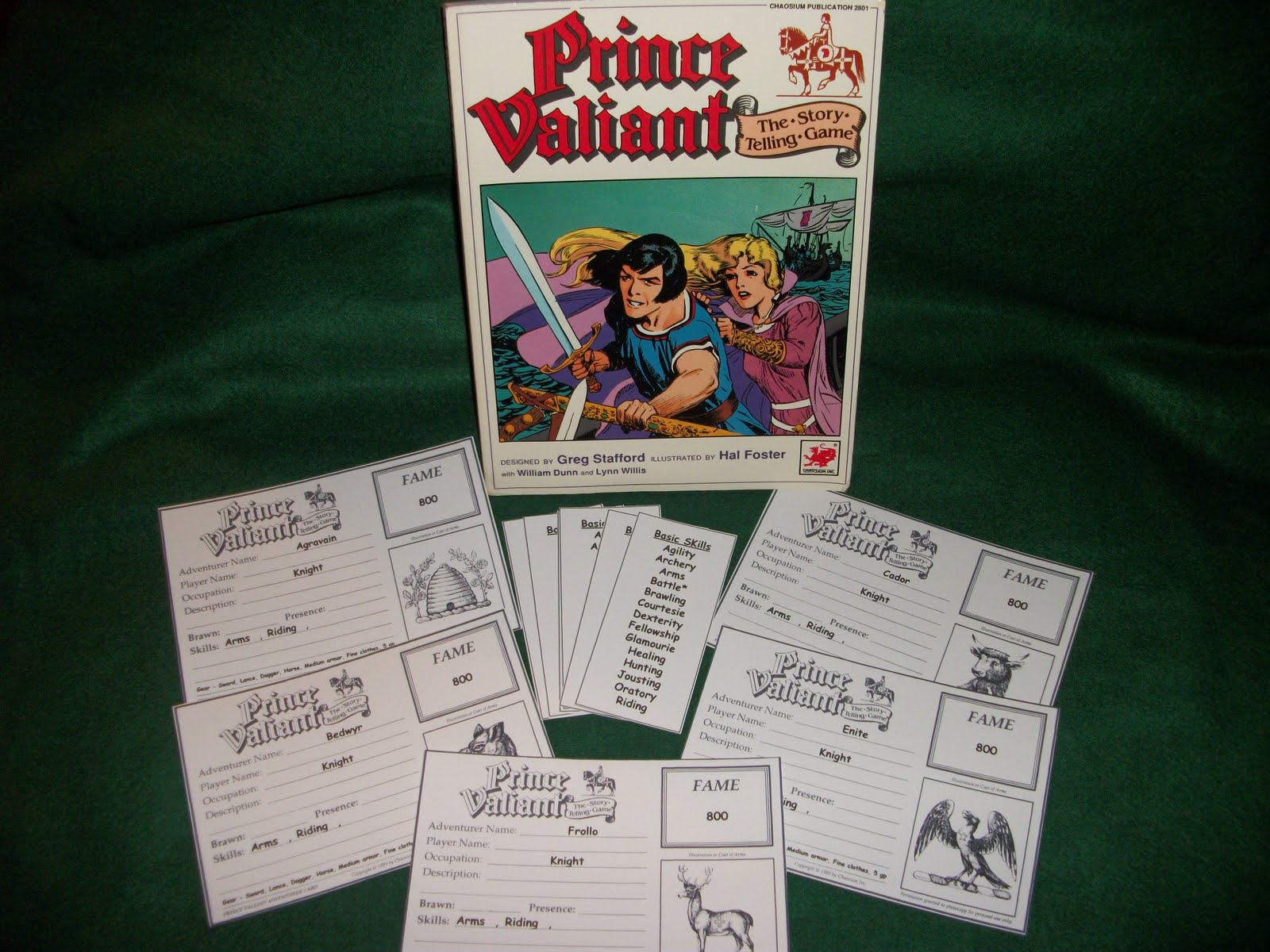
Prince Valiant: The Story-Telling Game was in 1989 an early precurser of that shift we are talking about here, but the big success in that regard was Vampire: The Masquerade. The tag line back then had been very apt, it was a game about playing THE MONSTER. All of a sudden you'd be way above humans in the foodchain, and in a contemporary setting, no less. Still small fries, all things considered, but powerful small fries.

Classic rpg fork [source]
 You could say it was the first time that the power curve in rpgs shifted from being on the system-side to being mostly on the side of the narrative. And that's significant in that once it is established that you can just narrate that you are the MOST POWERFUL CHARACTER OUT THERE (TM), although V:TM offered enough meat with its system that a somewhat prolonged campaign arc was possible.

Still, it turned out to be the starting point for a clear trajectory, with the PbtA games as one high watermark and the Black Hack games as another.

Interestingly enough, there seems to be a trend to glorify the original beginner characters from early D&D towards the extraordinary. My guess would be that it has something to do with loading the characters with some meaning they didn't have before, like PUNK, for instance. It's pretty much the Robert Rankin approach described above, where the lense through which the player/character see the world colors everything mundane in some special light.

There's also a massive manga and anime trend to have ordinary people become extraordinary because they end up in extraordinary circumstances (like a fantasy setting, but are actually very capable in that setting compared to the real world (where they might be nothing!). In other words, ordinary characters turned extraordinary because their extraordinary surroundings are just ordinary for them is a classical trope by now, which might explain the appeal in role-playing (which follows the same meta-knowledge metric: players knowing the rules fare better).

Blades in the Dark is a more recent powerful contender for the "extraordinary characters" category as well and The Spire RPG seems to be the newnew hot in that regard (giving players lots of narrative power, for instance). 

D&D 5e tries very hard to be that kind of game but obviously brings a lot of baggage to the table, which will make it a great example for how different those games actually are and how it's more like a spectrum on the user end of things. Because D&D was the original blueprint of all things rpg, it will have always had room for the story-telling gamers.

You can't, on the other hand, play ordinary characters in games that are designed for extraordinary characters only (unless you go for the comedic break of the ordinary character doing ordinary things among extraordinary characters). We tried, actually, in one of our groups once. Was a new group, didn't last, btw. I had offered to DM the WitchCraft rpg and I told the players that it is about powerful characters in an urban horror/fantasy setting.

All agreed and knew what was what, but as soon as character creation started, half the group wanted to play ordinary characters in a horror setting. WitchCraft doesn't work that way and that led to many discussions why there is no tension for the ordinary characters. They just didn't get that they were talking a different kind of game. As I said, didn't work out in the end, and it was more symptomatic that the game played out as it did. But it illustrates my point: original D&D could have been played that way (and there actually are urban fantasy b/x variants out there), WitchCraft was designed to NOT do that.

There's also the little fact that playing the first editions of D&D will grow a character from wimp to god and one could always just start with a more powerful character along that trajectory (Goblin Slayer would make for a D&D campaign like that).**

But who likes to play what and why?  

Different players altogether?

I might have to start with a disclaimer here. First of all, people will change between the "roles" in their life. A loving mother can be a bloodthirsty barbarian on her weekly gaming night. People play to relax. To be someone else or to be among friends or because the gaming immerses them. This is, in a sense, where we connect a bit with Part 1 of the Motivation Series, but only to (maybe) add another facet to it.

Here's the part I'm talking about (5 positive motivations for players to join your game):

  • DOING something meaningful (mainly socialicing with others for a collective experience ... leveling up & campaign play as milestones, those things)
  • LEARNING something meaningful (collecting experiences & testing approaches to reality)
  • COMPETING meaningfully (negotiation, tactics & strategy)
  • BEING someone meaningful (exploring who you are or aren't & why)
  • CREATING something meaningful (a game, an experience, a story)

I'd say that players going for "extraordinary characters" would, going by the 5 types of motivation proposed in Part 1, be mostly among the people motivated by BEING someone special and those aiming to CREATE an experience. COMPETING and LEARNING motivations would gravitate more towards that are challenging and offer some more skill oriented growth (instead of, say, personal growth). Those in it for DOING it as a social activity could go either way, so we'll have an even split among motivation types. Nice!

The new aspect here would be, then, that finding out what actually motivates people in joining your game is actually quite easy. You just ask them if they'd rather play (A) an extraordinary character doing ordinary things or (B) the other way around. There are three possible answers: A, B or "I could go either way, I'm in it to socialize with friends" (or something along those lines ...).

An "I don't know" shouldn't cut it, to be honest. Sure, talk it out, but if one of the three possible answers doesn't appear naturally relatively fast, it would hint (imo) towards a motivation that hasn't anything to do with gaming. Just something to be aware of, I guess.

Just saying ... [source]
One more piece of the puzzle ...

Still not where I wanted to be with this, BUT another important piece, imo, as we will need to talk about what different kinds of role-playing games are out there and why that matters immensely in terms of player motivation. What we got to explore in this post helps shining a light on some of the distinctions.

That said, being aware of the axis described above should be useful in itself as it should help you in finding an understanding about why we play the games we play and why some will work for you and some won't just because of some design choices that aim to please a ecrtain type of player.

By accident or consciously doesn't matter, if you think about it. Sometimes it's just a designer's raw preference that resonates with likeminded people. What does matter, however, is that is not "all the same".

I hope I was able to make my case here and that you guys enjoyed reading this. What do you think the implications are? Did it change your perception about your preferences? Thoughts and opinions are, as always, very welcome.

------------------------ 

If you enjoyed the above, you might like the blog anthology series I started publishing on drivethru. You can get it here and it definitely supports the blog to drop by for the pdf here.

AND I'm still hustling this one: You can check out a free preview of Ø2\\'3||, that rpg I wrote, right here (or go and check out the first reviews here). I'm (still, but only until end of June) doing a sale on the game proper ...

If you already checked it out, please know that I appreciate you :) It'll certainly help to keep the lights on here! I'd love to hear about that, too.

Just look at that beauty ...

 ------------------------

* I have to figure out how tactic, card and puzzle games figure into that, but I think they might just be something else entirely, leaning towards boardgames and such.

** Okay, here is yet another dimension to this: it is known that many D&D campaign fail when the characters becoem to powerful. Mostly that'd be because the DM didn't shift gears along the power curve and challenged the more powerful characters with something adequate. But in a sense it shows how players who like to play ordinary characters in extraordinary circumstances, actually don't like it when the game turns that around after a couple of levels. Anecdotal evidence, for sure, but nonetheless. It fits the pattern, doesn't it?


Tuesday, July 12, 2016

Narrative Flow vs. Player Skill

Well, when I'm on a roll, I'm on a roll. I closed my last post with the idea that players always have the possibility to influence the flow of a narrative by concreting it up to a point where the result is calculable for the players. Here's about how ... Might be my shortest post this year, too!

Narrative Flow

The wobbly core of every role playing game is the narrative flow that emerges when playing the it. It's that picaresque narrative that forms in hindsight our stories and all that forms over time the campaign. Again, because it bears repeating, the perception of our role playing experience is comprised out of 3 levels:
The Narrative 
becomes 

The Story 
becomes 

The Campaign
Everything we do in the game informs and/or forms those levels. Player decisions, DM reactions, system responses, idle chatter, movie references, they all become in retrospective the gaming experience. It's how our brain works, I guess. We interpret our reality to stories, because context is a process of understanding.

But that's not the narrative flow. Not per se, anyway. The flow describes that specific moment when the narrative clicks at the table. There is tension and all involved ride the narrative like a wave. You won't have that for a complete gaming session, but ideally you should have it several times during one, bridging the rest as good as possible (and this is, again, where interpretation helps ... the DMs duty).

Again:
There is clear distinction in classic role playing games between 
what informs the narrative and what forms it.

On the informing side are system and players, both feed with their intertwined dynamic of attempt and result the narrative with fragments. The DM then, traditionally, forms all that into a coherent interpretation, closing narrative arcs or creating new ones as needed.

All participants of two sides are connected through communication. This is no surprise, of course, but it is very relevant for the game. The system communicates results and the DM communicates context. Both DM and system are somewhat bound to integrity, they function under fixed rules when forming narratives, like arcs of suspense, internal coherence and suspension of disbelief. If rules or a DM produce unlikely results, they destroy (or at least damage) the flow. Maybe we could describe them as agents of harmony towards the narrative.

Players are in a unique position here. They communicate possibilities and this is, finally, where player skill is situated.

Player Skill

Communication is always between all participants. Players communicate with the system to optimize their decisions from a technical side, so to say. With the DM they communicate about the specifics in the narrative. What is possible and how is it achievable. Possibilities, but not necessarily harmony.

So players are, in a way (and going with the analogy above), agents of chaos. A disruptive power, if you will. They are bound to the narrative, but since they are not forming it, as described above, they are free to challenge the harmony instead.

If you think about it, that's all the players do: disrupting the narrative towards a more favorable outcome. And that's it. Sure, some like to immerse themselves in a role and play that and there is a wide range of goals you might associate with role playing games and all those things are legit. But if you look at the game from the storytelling perspective (not just the white wolf variant, but in general) you'll see that this is what it's all about. Anything you want to achieve as a player in a traditional role playing starts with exactly that basic assumption.

Now, where from there? Well, a player could use this for all kinds of things. Recognizing important NPCs or plot devices and killing them off when the DM is careless would be a classic in that regard. But although the ability to destroy a game on a purely narrative basis shows the right talent, it is not yet fully realized player skill at all. It's just destructive.

It might just work ... [source]
So what is player skill? As a consequence of the argument I'm making here, it is using player communication with system and DM to inform a narrative beneficially towards the goals all participants formulated in the game they are playing by narrowing down the narrative options to a manageable scale.

In other words: the best technique to achieve any goal as a player in a role playing game, in my experience, is limiting as many options in the ongoing narrative as possible. A DM is obliged to communicate what a character can know. But every time you get an answer about the current situation in the narrative, the DM also codifies (forms) the result. He has to make decisions and with that he limits his options in the narrative.

Ideally this is a part of the game without dice or system up to the point where a player has enough information to get advantages out of it. No rolls in the beginning, easy pickings afterwards.

Using "blind spots" in a system is another way to make this work. That's how lamp oil and fire or the ten foot pole got so popular in early D&D. Clever usage of the environment that somehow circumvents the system to get an advantage in the narrative. This and limiting DM options obviously go very well hand in hand.

Everything a player might want to achieve starts here and a player being good (skilled) at playing it like that is a real asset at the table. For all involved, actually, as most DM's I know really appreciate a challenge like that.

Balance

Damn, I've been writing towards this specific point for a long time now. Never quite got to it until now, though. There are many games out there today that allow players the power to actually form the narrative instead of "just" informing it. I never liked that, to be honest. Another trend is to reduce the system information process in a narrative towards the bare minimum (rules light systems) and I never liked that, too. Now I know why. Balance:
The Triquetra are players, system and DM, the circle is the narrative [source]
I mean, sure, I get it. Playing with those elements has merit (like with InSpectres*, for instance) and helps producing very specific results (My Life with Master comes to mind), but are they fully actualized role playing games? Maybe not. For me at least the beauty of playing is in the balance you can find in, say, the (wait for it ....) D&D Rules Cyclopedia, for instance**. Because all participants (and that includes the rules) play an equal (if different) part in creating the narrative that make the stories we love.

Other games with different emphases do that, too, of course. But it's the "equal"-part I'm talking about here. It's all a matter of taste, of course.


* Which obviously has a movie now? The random things you discover doing research ...

**  There are many, many other games that fulfill the criteria I formulated above. Cyberpunk, Runequest, the oWoD games ... there is a lot of them :)

Thursday, March 31, 2016

Faking it (dirty DM secrets are somewhere in there)

Asked the girlfriend the other day how she perceives my DMing and she said I'm really good in faking knowledge (as in: she knows how much I prepare ...). So, I guess that's a good thing. Worth a post, too, because you can't know everything as a DM but people will have to rely on your opinion. If a DM can't make it work for a group, he's the wrong guy for the job (or girl, being inclusive and all). Right?

About being right ...

We saw Thank you for Smoking the other day again. I love that movie. There is a scene where the main character, Nick Nayler, shows his son how to win an argument not by being right or convincing an opposition, but by proofing them wrong. Behold:


In other words, credibility is half the battle. Wits is the other half. Goes for defending cigarettes (I wouldn't, but anyway) and for DMing a game. You see now, knowledge doesn't even have to be a part of it. It helps with the credibility, that's true, but credibility could be derived from many other sources (being famous could compensate a lot, intelligence doesn't hurt, friendship, google ... I could go on). 

And wits can do a lot for you in an argument. Man, people good at talking will get you to tell them what they need and end up shining with it, too. Following the above, proofing someone wrong would be one technique to support credibility and wits is one way to achieve this. But it could also be knowledge and/or fact checking. Even agreeing or admitting to be wrong could help winning an argument or gaining credibility ...

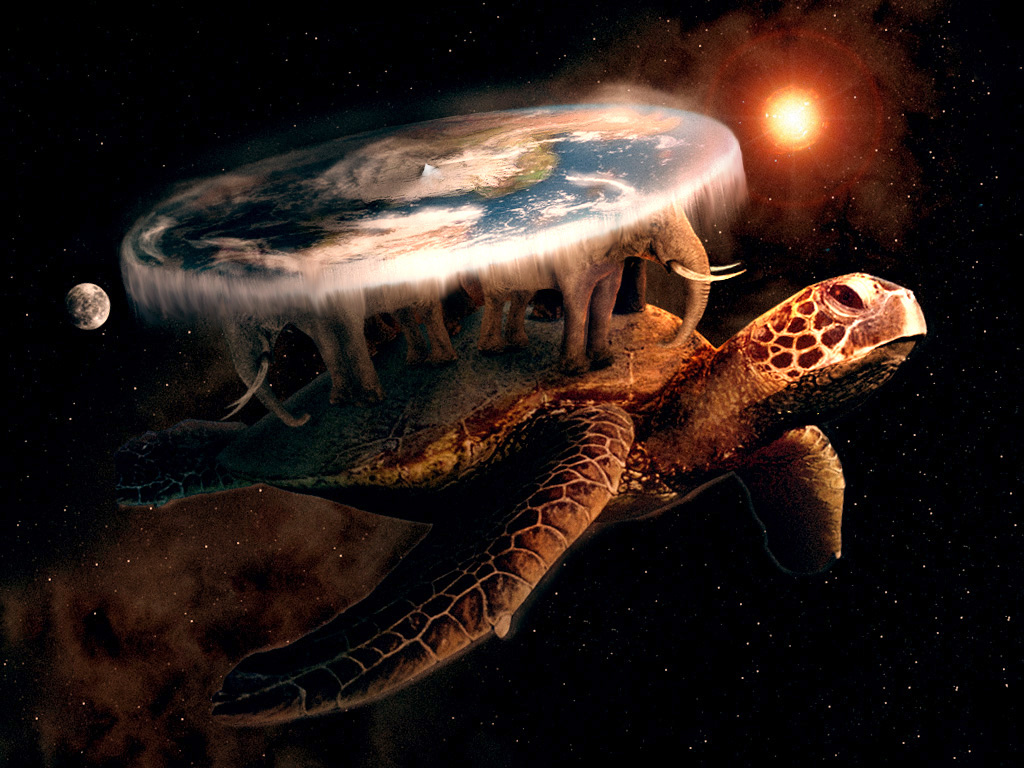
What I'm trying to say here: there is a lot about "being right" that goes way beyond knowing something. There are people telling you earth is a disc and there are people actually believing it. There are books about urban legends and in every case you'll find people who'll assure you it's all true. Aliens, anal probes, the complete show. 

Pratchett knew the truth is out there ... or something [source]
DMs can use this at the table!

But how? As most things, it starts by surrounding yourself with the right people. Friends are a good direction to start looking, but what you really want is acceptance. Respect even, if you can get it the beginning. But when the players don't even accept you in the role as DM, you might as well quit it right there. Because this is your foundation for trust, credibility and, yes, respect. If you get a chance you usually also get some wiggle room to navigate, which you'll need, because ...

... you have to learn how your crowd clicks. Favorites, weaknesses, group dynamics. Again, acceptance is the basis. Only if they are comfortable with you running things, they'll relax somewhat and give you the benefit of the doubt more often than not. Learn to work that crowd. Humor them, ask people for their opinions (especially if they know better for some reason), but also show them where you draw the line.

Here we go full circle. Check above. Consensus is not about being right, but about getting right. So wherever an individual DM would draw a line, he needs to be able to enforce it. That's one reason to have a sentence like "The DM has the final say in all matters!" (or some such thing) in almost all rule books. Codifying it like this to allow a DM that freedom, supports the very ideas discussed above. It builds on acceptance and demands respect. If not abused (because a DM has the obligation to provide, of course) it will result in trust.

In a way being a DM is a lot like nurturing a plant. You do it right and you'll have a strong and growing plant, with some room to model as an extra. You do it wrong and you get a dead plant ...

So it's all about manipulation?

There is now a multitude of ways to facilitate this. Way more than I have room, time or inclination to write about. Manipulation is one of them. People like to dominate people and sure enough, it's often all you need to make something work. Just as wrong, in my opinion, but that's neither here nor there. I'd rather talk about how I try to work this at my table.

I believe there is a certain set of traits that help a DM getting the job done. Knowledge of the rules certainly is one of them (although I actually suck at that one ... most of the time, anyway), but knowing your way around the books is a close enough substitute (you don't need to know the rules for aimed shots if you know where to look at, right?).

What helps me a lot, though, is being able to come to quick and realistic estimations of facts and situations. That's something you can train and I believe every DM worth his salt is somewhat good at "winging it" like it's the genuine item. That's not manipulation, but a good sense of what could be right and what could be accepted as right. Wits might come in handy here, too, as (the other) half the battle is credibility and being able to win an argument (fast) goes a long way in keeping the game on track.

In other words, it needs to look at least as if you could be right about what you say and people will accept it as the truth within the game. How this might be achieved is implied above (the part where you can get right without having actual knowledge of The Ten Thousand Things ...).

Those are not the druids ...

So being able to "fake it" is (in my opinion) a skill worth having for every DM. It's an useful illusion that can help greasing the flow of a game. But it's not all smoke and mirrors. You can't avoid feeding the brain a lot. Music, films, tv shows, documentaries, fiction and non fiction books, comics, blogs, role playing books, computer games, board games, all genres, all topics are interesting. We live in a golden age for stuff like that and while it's impossible to read/see/play all or even a small part of what we got access to, it is very well possible to keep yourself busy with it all the time.

Over time it all starts to connect. At least in places. Your game is in an existing city? If you can't visit it, read about it, look for documentaries and the towns history. You don't even have to write stuff down, just expose yourself to the information and you'll remember a lot without even trying. Main villain in a campaign is a banker? See movies portraying them, read a biography and try to get a feeling for the guy beyond the stats the game provides ... Always think: how could I use this in the game?

But why stop there? You go for a walk and you observe your surroundings for inspiration. I've read somewhere (can't remember where, sorry) that it is a good exercise to look back at your day before the game and take three random events, encounters and/or observations of that day and work them into the game. It's a good exercise to train using everything for your game.

And then there is the interaction with the players. Prepare stuff (as you are bound to anyway), not only send a mail, but add some flavor text and a picture, if you can. Reminding them what happened can help immensely with the immersion. But most of all, play with people you can treat with integrity, appreciation and respect ...

I'm not saying I am all of that, all the time, but it's something I aspire to keep trying. But something I really got good at over time is, you know, faking it to bridge the gap. Well, I hope you guys found an original idea or two in here and I didn't just state the obvious in a way too long text. What things do you guys do for your campaigns? What's different?

 ...

Shit, totally forgot about humor! Yeah, you'd need that, too :)

Tuesday, March 15, 2016

Musings about Combat in Tabletop Role Playing Games

I've been thinking about combat a lot lately. Mainly because I write at two systems right now where I try to go away from what D&D did. It's harder than one would think. For me at least it is. "Combat Design" is something you won't find that much information about, as far as role playing games are concerned. And that's a shame, really, as I think it's a chance to build systems that enhance the experience of combat without being too complex. At least on the player side ...

Case in point: HALO (1)

Bear with me a moment. I will go back to the tabletop variant soon(-ish). But I really love me some HALO and some of the concepts that work here should work with the analogue step parents we love to play so much.
The Masterchief! [source]
It's the first ego-shooter that had huge areas to explore and a decent AI to make it feel organic, realistic even. How to engage a group of enemies is totally up to the player and the coop-feature (for the old x-box) is the icing on the cake. It's beautiful.

So what are the main factors to make this work? I see 8:
  • complex but realistic environments (laws of physics apply and so on)
  • different enemy types (groups with different strengths and weaknesses)
  • common sense (as in predictable) directs enemy behavior
  • wide range of possible tactics (from efficient to improvised)
  • mission goals and agile story arcs (small objectives in a "living" environment)
  • huge availability of tools and equipment (vehicles, enemy weapons)
  • (but) limited (!) weapon use for players (ammunition, number of weapons carried)
  • precise and generous interface with high basic character capabilities (runs fast, jumps far, reacts immediately, fair hit zones)
Environment is a neutral factor until a player or the opposition or the story changes that. Freedom of movement and the opportunity to explore allow a player to collect as much information as he needs to apply the tactics he deems necessary to complete his missions. In other words, a player gets a chance to make informed desicions (if he wants to). The interface supports this by getting out of the way during play and highlighting possible interactions with the environment where necessary, which, in turn, helps with the immersion into the game and encourages exploration.

My favorite level in Halo 1 [source]
So it's easy to navigate the game, with lots to explore, find and use before you even start shooting. Having the time to do so is just as important, in that regard. Limiting the number of main weapons a character can carry to two, with access to two different types of grenades (also limited) and (rarely) a fifth option where you are able to zoom in on a target, actually helps keeping it simple on the player side. It's furthermore important that all weapon and equipment options are viable options and what a player uses is to a huge degree a matter of taste (limited by access and tactical necessities).

The final three factors are now the opposition, objectives and the story as the glue. The character has a reason to be in the story and that story unfolds in front of the player because of his decisions and accomplishments or scripted events (most of the time when entering a new area, so as a result of exploration).

Having a story means narrowing the scope of a scenario somewhat, mission objectives will narrow it even more so. With the freedom a player has (as described above), I'd say this is a good thing, because it gives the player an opportunity to make important decisions and use all of that to his advantage and with a goal.

And only now we start shooting at the opposition. Story, missions, resources and environment inform our tactics and goals. The good design doesn't stop here. Enemies react "realistically" to threats, run for cover (and use it) or flee even. Line of sight is important, they are calm if they are just on watch and alarm others if alerted .. and all that means they are somewhat predictable for the player.

Even if he doesn't care to study them he will find them reacting as they are "supposed to", which is just as important as giving him the chance to study them. It's this openness to player choice or player approach, that makes the game so engaging. But it is still not enough. Diversity in the enemy design is the last factor. Hierarchy, power levels, different abilities and weaknesses are key here and make the experience complete.

The question now is how al that is relevant to tabletop role playing games.

War Game versus Theatre of the Mind!

The first thing you'll probably think now, is that role playing games in general (and D&D especially) have some very solid roots in war gaming, which is kindof, sort of doing most of the above. and you'd be partially right. There are some pretty solid skirmish rules for many, many tabletop rpgs. If you like to use (or have the resources for) miniatures and terrain, that is.

I know people go to great lengths to make this work at their table and I admire that. Honestly, I love looking at pictures of some of the set ups people come up with. I've seen things. And admittedly, if I had the space and the money, I'd have a room full with everything needed to build a huge dungeon and ...
Awesome! [source]
More awesome! [source]
Nah, I won't go down that specific rabbit hole (for now). Let's just say, I'm really not against using props like this at the table, but it has it's limitations. Except for the material part, which is immense, even if it might change with the advent of 3d printers as we see it right now (but that's not the point), well, except for that I often feel that ready access to another venue of commerce made some developers lazy enough to not only leave the bridge to war gaming wide open, but also neglect the chances to explore systems where the theatre of the mind is the only stage you have.

Or when they do, it often enough gets (and some might disagree here) unnecessarily compartmentalized and crunchy. I'll tell you where I see the problem with systems (A) either ignoring that combat might be any different than climbing a tree or (B) going all in with the details: the perspective is wrong or, better yet, skewed and that's mostly because games tend to treat characters as single and disconnected entities.

Every system that designs combat around that premise will more often than not rely on the DM to fill the gap somehow (using props or the narrative, for instance) or expands a character's abilities to a degree of detail that creates the illusion of verisimilitude (characters in those systems can dodge, take cover, have ammunition and a normative handle of sorts how well they'll hit the target under several circumstances ...).

One could think now that it is important that a character is able to jump 2.13 meters or run 8.376 mph. But is it, really? I think the idea that we might want (need?) exact measurements for our characters that are somehow relatable to our "real world" systems (other than in an abstract way), is pretty outdated and proven as tiresome (to say the least).

All that being said, even if I feel that many systems I have encountered are lacking a proper Combat Design (or at least are missing a great opportunity there) I have to admit that it is very possible for a DM worth his salt to make every combat system all shades of awesome if it works for him. But that just doesn't mean we shouldn't think about alternate approaches for combat systems when we are writing games ...

Insights and directions

I won't present complete solutions in this post, as I don't have them. But there are a few insights I will share. Halo is an extremely good example for well made Combat Design. Players can just interact with the world without any prior knowledge other than common sense and basic usage of a controller (the rest is done with tutorials and the story). I think it's not unusual in tabletop rpgs to handle it similar. Players don't need to know the rules. Or all the rules, for that matter. They should be able to just have an idea what their character is about and play it from there.

Fight! [source]
I believe that's for many people the reason to go back to those older system where you just had a sword or a fireball (I'm simplifying, of course). Anyway, that's what I meant with a skewed perspective. There is a point where systems got popular which outright demand that a player not only knows all of his character's abilities, but even needs to plan his character development tree and what not.

WoW is to blame. For sure. And all the games that tried to translate the idea into tabletop gaming. I won't call names and it isn't important. Anyway, at some point people said "No more!" and went back in time systems where they found a freedom they had been looking for. Halo teaches us that an easy to handle system helps with the immersion into the setting and I think the phenomena are related.

Environment is another big factor. NPCs in Lost Songs of the Nibelungs get (randomly determined) dice support from the environment (if they are familiar with it) and it really helps remembering and integrating it into a fight. It's a start.

As I was writing this, I thought a (good?) idea for a system heavily supporting the use of environment in a game could vary the combat die depending on the type of environment the fight is in. Fight in a swamp? It's a d12! In light forest? A d20! Open field? Also a d20, but a d30 when using a horse ... or something like that. Scale dice by how difficult a environment is and how familiar the combatant is with it. Could work for D&D, too. Either way, it should count as an example :)

Next up is enemy diversity and we all know about that one. I believe we could do more on that front, although we seem to have 1000 and 1 monster compendiums out there. Halo is, again, a prime example of how it can be done. Quality, not quantity might describe it best. As i wrote above: "hierarchy, power levels, different abilities and weaknesses are key". Role playing games are traditionally strong on the different abilities and power level fronts, hierarchies are in there, too. Sometimes. But the weaknesses? I don't know ... Tell me if I'm wrong, but I really can't think of an example where it actually mattered. Maybe single monsters, but in general? I think not.

As a rule of thumb I'd say a DM should only have a handful of very well prepared monsters* in his campaign (and that's certainly not new advice, but something I'll repeat just because it fits, again, with what Halo does). Let them have roots in the setting, folklore, rumors and yes, weaknesses. That old shtick with the Goblins having trouble with the sun or the dragon having a weak spot. A DM that can pull it off, will make his campaign shine so much brighter.

Having only light rules on the players side means there is a need and a chance to connect all this with a system like a dynamic sandbox or storybox or mysterybox or whatever. Not doing this would leave the heavy lifting with the DM. Or forces him to BUY PRODUCT (TM). And there you see how some solely commercial calculation fucks up good (proper?) design. You need an incomplete set of rules to sell miniatures and splat-books ... Okay, I'm exaggerating a bit. But only a bit.

Thing is, a role playing game needs DM tools to make it complete in my eyes. If a DM is to pull it all out of his arse, it stays and falls with that DM. A good set of tools could avoid some of that. And sure enough, there is a lot of that out there in the www. But since we are talking chances here, it's worth considering that a DM tool made with a specific system and all it's idiosyncrasies in mind, might (just might) be better suited for that system than some general advice you find in the blog-o-sphere.

I just started to think that I went a bit off track here. But no, all of that goes somehow into combat: Swamp Goblins hate rain and will avoid fighting or even laying ambushes when the weather is bad (ruins their camouflage ...), so characters get told they should travel those swamps only when it's raining ... which brings it's own set of problems ... and so on and so forth. A living environment, story arcs and missions all help the players to decide where and when they need to fight and how they do that.

Lastly a word on cooperation. It's a big feature for Halo on the xbox back then and although people are already at the table and playing together for tabletop rpgs, I feel like it really helps when the system not only somehow retroactively rewards working together but actually has rules that make it a tactical option in combat. Something like if characters support each other, they could double their damage or get an extra attack or double their AC. You know, something significant. Something players would not merely consider (because of some stupid +1 more or less) but really seek out.

You can't make this unseen! ... and it's teamwork :D [source]
A good system tries to take all of that under consideration. Early D&D does some of that and I love the Monster Reaction roll, for instance, for allowing exactly that. But when we are writing games ourselves (and that's something I think every DM should at least try once), we could do more than that. Or at least aim higher. And if we do it with the purpose to get it published, we should make it as complete as possible.

One more thought: player skill is something that thrives when the rules are reasonably light on the player side of things.

Combat Design

As for Combat Design, I'll try to see the characters as part of the rest, not as singular entity. Part of that is in the card based mission generator I wrote about a week ago. The Grind will also feature a system where the environment factors into armor in a way that allows a character to reduce his position instead of his health (or vice versa) and cards will be used to support some of that in adding another dimension to the whole thing. Cooperation will be big, too, like giving others your successes.

Lost Songs adds another dimension to this in using board game elements for combat. Habtics is an aspect I didn't talk about in this post, but the short of it is, that it helps players to have, say, a number of dice you can use in a round and using them means actually putting them somewhere on the character sheet. Also helps "reading" a fight better.

In the end I think it's important to find ways to transcend the step-by-step thinking we see so often in combat systems and get to a more organic, fluid way to kill for xp. I've seen this to some extent with some indie role playing games and peope keep writing and coming up with awesome stuff, so all is good.

Well, I know I have yet a long way to go before any of that is done and mistakes are part of the deal. But trying, folks, trying again and again is where it gets better :)

It turned out to be a long one. Again. Still, I hope you guys found some food for thought ... If you have encountered some good Combat Design on your travels outside the mainstream, please feel free to share it in the comments.


*Yeah, a footnote. Sorry :) I just wanted to add that the same goes for settings. It's something you may observe in almost every good anime tv show: they'll take a couple of strong themes and mix them without blurring the lines too hard (take Samurai Champloo, for instance, as a fantastic mix of Samurai and Rap culture ... if you haven't seen that yet, check it out). They explore themes by reflecting them unto each other. I always thought that's a nice idea for building a campaign setting, too. Footnote: out.

Also: Samurai Champloo Opening Credits for those who managed to get all the way down here!


Saturday, May 30, 2015

A comprehensive guide to using qualities - Filling the Void III (still writing the beta version for LSotN)

This third part will conclude the set of rules I used for our initial play-testing. Everything after that will be exploring new territory (level advancement, adventuring and resting seasons, magic, random clan territory, there's still a lot to do ...). after reading Part 1 and Part 2 and what I'm writing right now you'll know what I know (well, mostly) about Lost Songs of the Nibelungs. It's not finished, but it's already a game and everyone interested in seeing what Lost Songs will work like should have a first impression by now (or in a couple of minutes).

Qualities in LSotN - Introduction

I know, I'm writing and re-writing this all over the place. I have been told. And yet, it's crucial in finding an understanding and I believe it's interesting to see how it all started and where it ended, no? And writing this on the blog helps me focusing, so there is that. Anyway, here is a complete summary of how Qualities work in Lost Songs, with some new ideas and what from the original concept actually worked at the table.

Traditionally in role playing games you have a set of active stats (ability scores) and a set of passive stats (saves) to let characters interact with their surroundings. My understanding is that everything in rpgs derives from this basic concept: Skills and Combat are on the active side as things you use, while threshold of pain,  spontaneous reactions to the environment or surviving poison, to name but a few, are on the passive side of a system. There is a clear distinction and if you are aware of it, you can shape it as you see fit and as long as you keep this basic distinction in mind, you can't do much wrong.

Expanding more on that passive part is what I'm mostly doing in Lost Songs.

So how does that work? The basic idea is that all level zero characters, being young and unconsumed, start more or less with the same qualities and saves, as players distribute the values 18, 18, 16, 16, 14, 14 among the qualities Muscle, Finesse, Grit, Wits, Nerve and Fate and get the fixed saves of 12 derived from qualities with an 18, 11 derived from qualities with 16 and 10 derived from qualities with 14. Those saves are:

  • Muscle - Withstand (also Base Attack)
  • Finesse - Reflex (also Base Defense)
  • Grit - Stomach
  • Wits - Sanity
  • Nerve - Serenity
  • Fate - Encounter Reaction

There is a very close relation between Qualities and Saves as Saves are in the beginning circa 2/3 of a qualities value and when there's a permanent change of a Quality's value, it will also affect the save to some degree (but not base attack and defense).

To make this a relevant gimmick in the game, Qualities are considered pools that will be reduced during session, which might result in permanent damage that, over time, will shape each character with individual scars and knacks.

Mechanisms and subsystems

All this should interact with each other in ways that translate well from using the system to talking about the game (the narrative). When using Qualities as pools, it is important to find reasons for those pools to be used and in an ideal case it would result in a broad spectrum of uses that covers all challenges a group of adventurers could encounter and is detailed enough to allow some distinction between what just damages a character's quality and what leaves permanent marks.

This just leads back to the basic concept described above: the importance of active and passive distinctions in a system and the subsystems it needs.

More specific, characters have some sort of hit points (Health in LSotN), those are traditionally connected to some sort of Constitution (Grit, in this case) and it is not far fetched to allow damage to somehow affect Grit. So I came to see it the other way around. Health is just a necessary extension of Grit, since getting hurt is a very important part of the game. So damage reduces Health first and Grit after that.

If both is gone, it really gets dangerous for a character, but it needs some further distinction to help the narrative along (as in, the system does something and describing that effect directly corresponds with how it's described at the table ...). Getting Health damaged is rather harmless and even loosing some Grit shouldn't have longtime effects on a character, but at a certain point it's going to hurt and leave scars and beyond that damage starts being permanent. After that only death is left ...

So we got health as the extension, parts of Grit as the buffer, the rest of Grit as where the hurt is and anything more than that as permanent damage. Here's an illustration:
Not necessarily the final version, but what I'm working with right now ...

This could be a level zero character and he could take 16 damage (Health + Buffer) before it would harm him seriously (damage drops to "scars") and over 22 points of damage before it leaves permanent marks (effectively crippling the character). If the permanent damage reduces a Quality to zero, the character dies in an appropriate way:

  • Muscle - Circulatory Collapse
  • Finesse - Fatal Cardiac Irregularity (the ultimate failure of bodily coordination ...)
  • Grit - Wounds
  • Wits - Insanity
  • Nerve - Nervous Breakdown
  • Fate - Intrigue and Betrayal


All those stages have different healing rates, of course. The maximum Health value is the healing rate for Health and the buffer (every buffer, actually). So a character would be fully recovered 4 days if he'd only lost his Health and the buffer. Wounds in the "scar" stage heal one point a day (so it'd be 10 days recovery time if the character had lost Health, buffer and "scars"). This would also leave a permanent mark on the character's body after healing. It is encouraged to keep track of stuff like that ...

Permanent damage doesn't heal on a daily basis. Most of it doesn't heal at all, actually. But characters will have a chance regaining some of that between quests by celebrating, courting beautiful maidens and leveling up (to give but a few examples, the complete list will be part of a future post about level advancement and the seasons ...).

Applied on all Qualities, permanent damage will over time map a character's history. But what's easily enough explained with damage, really needs some additional rules for all the other Qualities. The solution is quite easy, I believe. When a character fails a save (a roll of d20 + save value vs. difficulty), he looses the difference between what he rolled and the difficulty needed as damage to the corresponding Quality.

Example: A character sees a tentacled monstrosity and his Sanity is challenged. DM wants to make it difficult, so he says it's a save vs. 25. Character has a Sanity value of 10 and rolls a measly 3 and comes up with a 13. The difference now to 25 is 12 and that's the damage he get's on Wits (because that's the corresponding Quality). If we go with the initial values described above, his Wits value would be 14 (with a 10 buffer and 4 "scars") and the character would definitely keep some mental scars from the experience. Taking the Grit-example above for healing rates, the character'd need 5 days to recover from that (3 days to heal the first 10 and two days to heal the other 2 in "scars").

Here's a list how all them Qualities are affected in the game:

  • MUSCLE: Endurance (as extension), Withstand (as Save) - damage through exertion (a character overexerts himself, permanent damage means he's breathing a bit shorter after what happened to him)
  • FINESSE: Reflex (as Save) - damage through immobility (a character gets his coordination wrong, permanent damage here means he's a bit less flexible after what happened to him)
  • GRIT: Health (as extension), Stomach (as Save) - damage through bodily harm (a character gets damaged with weapons or poison, permanent damage here means his physique is weaker for what happened to him)
  • WITS: Mana (as extension), Sanity (as Save) - damage through exposure to the weird and evil (a character sees something that challenges his mental health, permanent damages means he didn't succeed and has some insanity connected to what happened to him)
  • NERVE: Serenity (as Save) - damage through stress (a character is damaged by stress, permanent damage here means he'll collect some nervous ticks and addictions because of what happened to him)
  • FATE: Encounter Reaction (as Save) - damage by intrigues and by making enemies, also for avoiding permanent harm on other Qualities (a character is the target of a smear campaign, somebody hates him or a player decided to avoid some permanent damage to another Quality by reducing Fate instead)

I believe this systems maps everything a character could experience in a game. It's also always connected to what happens during the game that goes beyond a system response (something like: "Jörge just never regained his speed again, after he'd been so humiliated in that race a year ago ..." or "Since he'd shot his nerves back in the Silkhorn Woods, he always got nervous sneaking through dark woods.").

One last word about permanent damage, Saves and Fate. Permanent damage will reduce a Quality and the buffer/scar stages respectively, but the saves stay the same. Anyway, since all permanent damage is linked to certain events, it's easy to assign circumstantial deductions whenever possible (so if the character in the last example above has to enter some dark woods again, he'll get an appropriate reduction of his Serenity Save, if it becomes necessary to check on it).

Fate, now, helps a player shifting some of the damage done to other Qualities: if a Quality is reduced below zero, a player may decide to put the damage below zero to Fate instead. But this is a gamble, as a reduced Fate very well could result in some poor Encounter Reactions and long-time enemies, ultimately (that is when Fate gets reduced to zero) killing a character through intrigue and betrayal. It puts a focus on dying because of intrigue and betrayal, but that's totally appropriate for a game about Nibelungs ...

Simple Tasks and Skills

So far the system is a bit heavy on the passive interaction part of the game. How characters react to their surroundings is covered in detail now. As for the active part I'd say it's a rather traditional approach. If a character wants to do something and it's not related to a skill or combat, he rolls a d20 + the appropriate Quality versus a difficulty. If a character has a skill he may use for the task, that skill's bonus is also added to the roll.

It doesn't end with failing the roll, though. A character will always have the chance to use Endurance to fill the gap.
Example: Let's give an extreme example for all of that and make a character unhappy. After a fight a character is already in the buffer zone (5 Endurance and a buffer of 11 and 5 for "scars", lost already 14 points, so 2 are left in the buffer) when fleeing from some wolves and wants to climb a cliff to safety. It's a coordination task and a check on Finesse is needed (Finesse: 14). No skill applies and the difficulty is 25, because that cliff ain't that hard to climb. Player rolls a 2 and that really ain't enough. Since it would be worse to fail climbing that cliff and face those wolves again, player decides to burn some Endurance and forces himself to make it.
So he needs to bridge the difference between what he rolled (16) and what he needed (25) by using Endurance (9 points) and that produces a new problem: it would result in permanent damage to Muscle (-2). Player won't have that either and reduces his Fate by two instead. He reaches the top of the cliff and is save from those wolves, but he's also laying there breathing hard for some time before he'll find the strength to move on (Endurance will recover fast after an encounter, something like Health value per 10 minutes) and might even pass out, since he dropped Muscle down to zero (Save of d20 + Withstand vs. 20 or he passes out).
So the active part is kept quite simple and that's on purpose. The main work is for the DM to stem. He needs to know how the surroundings interact with the characters and needs the tools to do so, while the players just need to state what they want to do and an easy understanding how the system is used for it. Combat is a bit more complex, but that's okay since there'll be lots of fighting and I believe it needs a system complimenting that fact to make it worth the exercise.

Here's what the character sheet looks like at the moment:

Still a work in progress, but that's what we're using  right now...


Final words

That's it. That's what I got and play tested up until now. I have a very good idea how combat will finally work (damage by weapon, ranged combat, sneak attacks and two weapon fighting are all done, but untested) and the next big projects are magic and level advancement before the gaming group gets back together. I also hope to get some random clans territory system and a creature encounter table done. But there are some other projects I need to get written in June and the Goblintribe-Simulator needs to make some steps, too.

But I hope I could give those of you interested a good look at what the game looks like at this stage. It works and I'm looking forward to testing some level advancement and class abilities with this. It already does a lot, but as soon as level advancement allows for a half crazy battle wizard or a scarred warrior priest things will get really interesting around the blog ...